
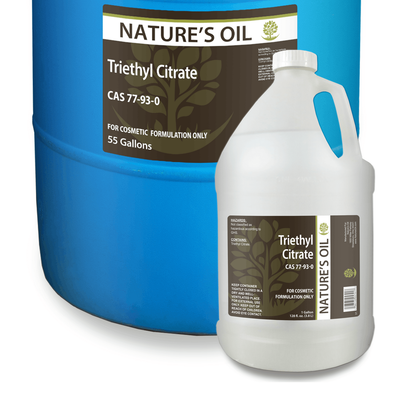
Triethyl Citrate – Deodorant Active, Plasticizer & Solvent
Triethyl Citrate (TEC) is a multifunctional, citrate-derived ingredient widely used in cosmetic and personal care formulations as a deodorant active, solvent, fixative, and plasticizer. It is the triethyl ester of citric acid and is valued for its excellent safety profile and compatibility in a wide range of systems.
In deodorant formulations, Triethyl Citrate works by inhibiting the enzymatic breakdown of sweat components that cause odor formation, making it a popular alternative to traditional antimicrobial deodorant actives.
It is also commonly used as a solvent and plasticizer in fragrance systems, hair care products, nail care, and film-forming cosmetic applications.
Common applications include:
-
Natural and aluminum-free deodorants
-
Roll-on deodorants
-
Cream and stick deodorants
-
Fragrance formulations
-
Hair sprays and styling products
-
Nail polish and nail treatments
-
Skin care emulsions
Why Formulators Choose Triethyl Citrate
-
Effective deodorant active for odor control
-
Helps reduce odor formation without blocking sweat glands
-
Solvent for fragrance components
-
Plasticizer for film-forming systems
-
Improves flexibility in sticks and solid systems
-
Compatible with natural and clean-label positioning
Triethyl Citrate is especially popular in aluminum-free deodorant systems where formulators want odor control without antiperspirant claims.
Technical Information
INCI Name: Triethyl Citrate
Chemical Name: Triethyl 2-hydroxypropane-1,2,3-tricarboxylate
CAS Number: 77-93-0
Chemical Formula: C12H20O7
Appearance: Clear, colorless liquid
Solubility: Soluble in alcohol; slightly soluble in water
Typical Usage Rate: 1% to 7% depending on application
Function: Deodorant active, solvent, plasticizer, fragrance fixative
How It Works in Formulations
In deodorant systems, Triethyl Citrate inhibits the breakdown of sweat into odor-causing compounds by limiting bacterial enzymatic activity. It does not function as an antiperspirant and does not block pores.
In film-forming and solid systems, it acts as a plasticizer, improving flexibility and reducing brittleness. In fragrance formulations, it enhances solubility and can help improve scent longevity.
Because it is a low-viscosity liquid, it integrates easily into both oil and alcohol-based systems.